
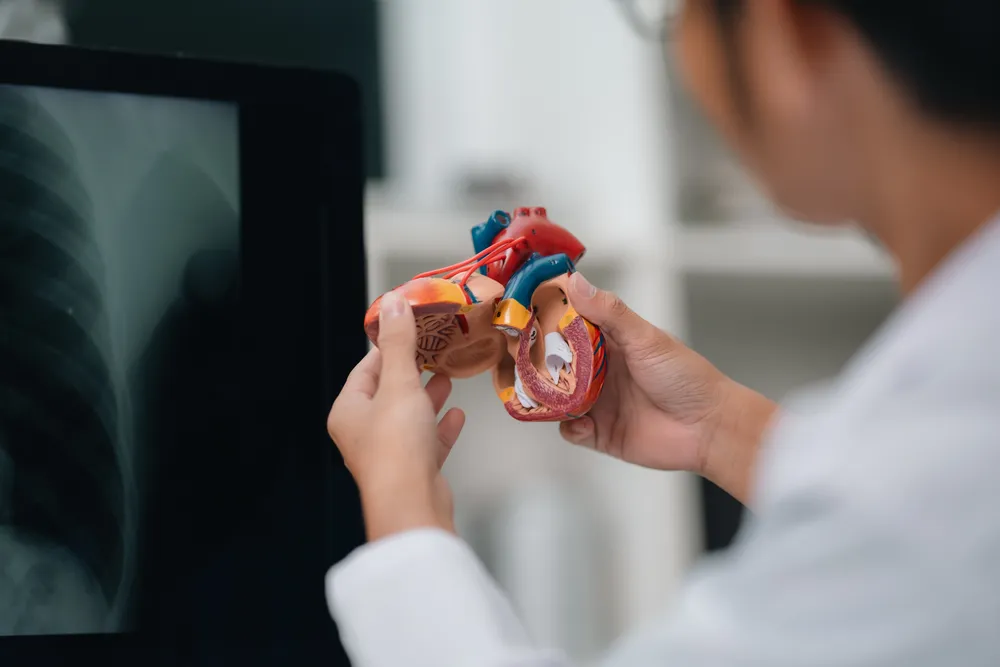
When the electrical impulses that coordinate your heartbeat do not function correctly, your heart can beat too fast, too slow, or erratically. This irregular or abnormal heartbeat is known as an arrhythmia.
If you are concerned about your heart health, our clinic offers comprehensive medical assessments for heart arrhythmia in Singapore.
This guide provides an educational overview of the common types, symptoms, underlying causes, diagnostic procedures and management options available for arrhythmias. Our guide is reviewed by a practising member of our team.
What is an Arrhythmia?
Arrhythmia is a condition characterised by an abnormality in the rate or rhythm of your heartbeat, meaning your heart may beat too quickly, too slowly, or with an irregular pattern.
While many irregularities are harmless variations of normal heart function, some indicate an underlying cardiovascular issue that necessitates a clinical assessment.
Under normal circumstances, a group of cells in your heart’s upper right chamber initiates an electrical signal that travels through the heart muscle, prompting it to contract and pump blood.
When these electrical pathways are interrupted, the coordinated pumping action is disrupted, causing the heart to work less efficiently and leading to symptoms that can affect your day-to-day life.
Common Types of Arrhythmia
Heart rhythms can be irregular in several ways.
Cardiologists categorise these conditions based on where the issue originates: either the upper chambers (atria) or the lower chambers (ventricles).
Atrial Fibrillation (AFib)
Atrial fibrillation is the most frequently diagnosed sustained arrhythmia in Singapore.
It occurs when the upper chambers of your heart experience chaotic, rapid electrical signals, causing them to quiver or fibrillate rather than contract firmly.
This quivering prevents the atria from emptying blood into the lower chambers, which can cause blood to pool and potentially form clots.
The clinical concern with atrial fibrillation is the increased risk of stroke. When a blood clot forms in the quivering upper chambers, it can travel through the bloodstream to the brain, blocking vital blood supply.
Because of this risk, managing AFib typically involves controlling the heart rhythm and using medications to reduce clot formation.
Other Common Arrhythmias
Beyond atrial fibrillation, other rhythm variations can also impact your cardiovascular system.
These are generally divided into heart rates that are too slow or too fast, alongside isolated extra beats:
- Bradycardia: A resting heart rate that is unusually slow, typically below 60 beats per minute. While a slow heart rate can be a sign of excellent physical fitness in trained athletes, it can also indicate that the heart’s natural pacemaker is misfiring or that the electrical pathways are partially blocked, resulting in an insufficient supply of oxygenated blood.
- Tachycardia: This occurs when your resting heart rate exceeds 100 beats per minute. Tachycardias can originate in either the upper or lower chambers. When they occur in the lower chambers (ventricular tachycardia), they represent a more serious clinical situation that requires prompt investigation.
- Ectopic Beats: Many people describe these as skipped beats or a sudden thumping sensation in the chest. They are premature contractions that happen just before the regular heartbeat resets, often triggered by stress, caffeine, or lifestyle factors, and are frequently benign.
Symptoms of Arrhythmia
The way an irregular rhythm feels can vary from one person to another.
Some individuals remain entirely unaware that their heart is beating irregularly, with the condition only being detected during a routine physical examination or a baseline electrocardiogram.
For others, the physical sensations are more noticeable and can interfere with daily activities. Common signs that you might be experiencing a rhythm issue include:
- A sensation of fluttering, thumping, or racing in your chest (palpitations)
- A feeling that your heart has skipped a beat or paused momentarily
- Unexplained dizziness, light-headedness, or feeling unsteady on your feet
- Shortness of breath during light activity, such as walking
- Persistent fatigue or a sudden drop in your physical stamina during exercise
- Mild chest discomfort or sensation over your breastbone
It is helpful to note that while heart palpitations are a primary symptom of a rhythm issue, they can also stem from non-cardiac origins.
We address the various underlying mechanisms behind these sensations in a separate, dedicated symptom guide on our website.
What Causes Arrhythmia?
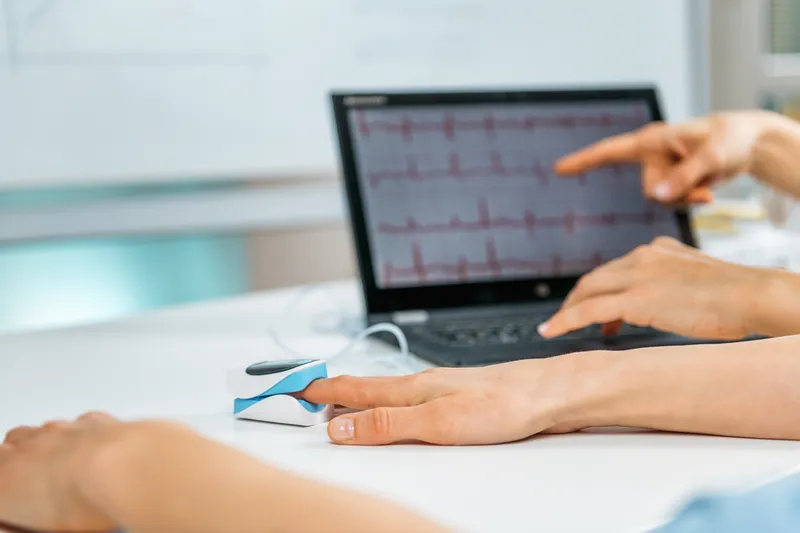
An irregular heartbeat is usually the result of an alteration in the heart tissue or an external chemical trigger affecting your electrical pathways. Identifying these factors helps us build a clearer picture of your overall cardiovascular risk profile.
Several medical conditions and lifestyle factors can contribute to the development of an arrhythmia:
- Coronary Artery Disease: Narrowed or blocked arteries reduce the amount of blood reaching your heart muscle. This lack of oxygen can damage the tissue and disrupt the flow of electrical currents.
- High Blood Pressure: Chronic hypertension makes your heart work harder to circulate blood, which can lead to thickening and scarring of the heart muscle walls over time.
- Ageing and Tissue Changes: As you grow older, natural wear and tear can lead to minor scarring within the heart’s conduction system, making irregular rhythms more common in older adults.
- Thyroid Disorders: An overactive thyroid gland (hyperthyroidism) can accelerate your metabolism and trigger a rapid heart rate, while an underactive thyroid can cause it to slow down.
- Lifestyle Influences: High intake of caffeine, regular consumption of alcohol, smoking, and elevated stress can irritate the heart muscle and precipitate episodes of palpitations.
When Should You See a Doctor for an Irregular Heartbeat?
If you notice a recurring sensation of an irregular pulse, scheduling a clinical evaluation is a prudent step to safeguard your health.
This allows a specialist to monitor your heart and determine whether the issue is benign or requires therapeutic management.
For residents in Farrer Park, our clinic provides an accessible location for scheduled cardiovascular reviews and consultations.
If your irregular heartbeat or palpitations occur alongside any of the following symptoms, call 995 for an ambulance or proceed to the nearest Accident & Emergency (A&E) department immediately:
- Fainting or a sudden loss of consciousness
- Severe, crushing chest pain or tightness
- Sudden shortness of breath that makes it difficult to speak
These signs suggest that your heart rhythm may be hampering your blood pressure or that an acute cardiovascular event is taking place.
How Arrhythmia is Diagnosed
We must first capture the irregular rhythm on a recording device. Because some arrhythmias are fleeting and occur only occasionally, we use a range of diagnostic tools to monitor your heart’s electrical activity over varying periods.
Electrocardiogram (ECG)
An Electrocardiogram (ECG) is the initial diagnostic test used during a cardiac evaluation. Small adhesive patches are attached to your arms, legs, and chest to read the electrical signals passing through your heart.
An ECG provides a snapshot of your heart rhythm over a few seconds.
It identifies persistent issues like continuous atrial fibrillation or blockages in the electrical pathway. However, if your irregular rhythm occurs only occasionally during the week, a standard resting ECG might appear perfectly normal, necessitating a longer-term monitoring approach.
Holter Monitoring
To catch intermittent rhythm abnormalities that do not appear during a short clinic visit, we deploy Holter Monitoring.
This involves wearing a lightweight, portable device connected to your chest via small patches for a continuous period, typically 24 to 48 hours or even longer.
While wearing the monitor, you go about your normal daily routine and keep a diary of any symptoms you feel, such as dizziness or fluttering. By matching the timing of your symptoms to the electrical recording, we can determine whether an arrhythmia is responsible for your discomfort.
Other Tests
Depending on your medical history and what the initial tracking reveals, further diagnostic investigations may be helpful:
- Transthoracic Echocardiogram: This is an ultrasound scan of your heart that allows us to visualise its valves and chambers. It helps us evaluate whether a structural heart issue or a weak heart muscle is contributing to the irregular rhythm.
- Ambulatory Blood Pressure Monitoring: This test tracks your blood pressure fluctuations over a 24-hour period to determine whether erratic readings are triggering your rhythm issues.
- Blood Tests: Routine laboratory checks can identify electrolyte imbalances or thyroid hormone levels that might be irritating your heart’s conduction system.
- Event Monitors: If your symptoms occur very infrequently, such as once every few weeks or months, a standard Holter monitor might miss them. An event monitor is a pocket-sized device you keep for a longer period, activating it to record your rhythm only when you feel palpitations.
- Implantable Loop Recorders: For even rarer episodes of unexplained palpitations, a tiny device called an implantable loop recorder can be placed just under the skin of your chest to monitor your heart rhythm continuously for up to a few years.
- Exercise Stress Test: Some arrhythmias are brought on primarily by physical exertion. During this test, you walk on a treadmill while connected to an ECG machine, allowing us to see how your heart’s electrical system reacts to an increased physical workload and higher heart rates.
How is Arrhythmia Treated?
Managing an abnormal heart rhythm is tailored to the type of arrhythmia you have. The primary goal is to relieve your symptoms and lower the risk of complications like stroke or heart muscle fatigue.
Lifestyle and Medication
For many individuals, an irregular rhythm can be managed effectively without invasive procedures.
We focus on lifestyle adjustments, which may include reducing caffeine, avoiding alcohol triggers, managing daily stress, and general improvements to living a healthy life.
Medications are also widely used to regulate the heart. These can include beta-blockers to slow down a racing heart, antiarrhythmic drugs to maintain a steady rhythm, or blood thinners to protect against clot formation in conditions like atrial fibrillation.
You can find out more about risk-factor management during a general heart check-up.
Cardiac Rhythm Devices
When the heart’s natural electrical system fails to maintain a safe, baseline rate, a mechanical intervention may be necessary.
A pacemaker is a small device implanted beneath the skin of your chest that sends tiny, imperceptible electrical impulses to stimulate the heart muscle when it beats too slowly.
Other cardiac rhythm devices can monitor the heart continuously and deliver therapy if a life-threatening pattern occurs.
Catheter Ablation
For certain rhythms that do not respond to medications, a hospital-based procedure known as catheter ablation may be considered. This procedure targets the areas of heart tissue that are generating the abnormal electrical signals.
During this process, a thin, flexible tube is guided through a blood vessel to your heart.
The specialist creates tiny scars on the surface of the heart tissue to block the disruptive electrical paths, allowing the normal rhythm to resume. Detailed information about this option can be found on our Radiofrequency Ablation page.
Living With an Arrhythmia
With appropriate medical management and careful monitoring, most individuals continue to participate in their favourite hobbies, work, and stay physically active.
Living well with this condition involves coordination between you and your healthcare team.
Learn how to check your own pulse, keep track of when your symptoms occur, get plent of rest, and avoid excessive fatigue.
Attending regular follow-up consultations ensures your treatment plan is on track.