
CT Coronary Angiogram

What Is a CT Coronary Angiogram?
A CT Coronary Angiogram is an advanced non-invasive imaging test that allows your cardiologist to visualise the coronary arteries, which supply blood to the heart muscle.
Using specialised computed tomography scanning and contrast dye, the test produces highly detailed images of the arteries. It helps detect narrowing or blockage that may restrict blood flow to the heart.
Unlike a traditional invasive angiogram, this procedure does not require inserting a catheter into the arteries. It is non-surgical and performed as an outpatient investigation.
For patients experiencing heart disease symptoms or those at higher cardiovascular risk, a CT Coronary Angiogram provides a clear and precise assessment of potential heart artery blockage.
Why Is This Test Important?
Coronary artery disease develops when fatty deposits accumulate along the inner walls of the heart’s arteries. Over time, this can lead to narrowing or complete blockage.
When blood flow is reduced, following may present itself:
- No symptoms
- Symptoms- usually initially on exertion, then progresses to occuring even at rest
- Chest pain or tightness or vague discomfort
- Shortness of breath
- Discomfort radiating to the arm or jaw
- Inexplicable Fatigue or dizziness
- These may represent symptoms of blocked arteries.
But many patients with coronary artery disease do not have prior symptoms
A prospective population-based study in patients with their first AMI revealed the following:
About 50% of patients presenting with a first heart attack had no prior cardiovascular symptoms.
12.9% had new, immediate ischemic presentations (such as unstable angina), and 36.2% had known prior disease, but no new symptoms in the immediate 90 days prior.
21% of patients in the study on first heart attack experienced a fatal event without any prior hospital record of IHD.
A CT Coronary Angiogram allows your cardiologist in Singapore to determine whether you have coronary artery disease.
It is particularly useful in assessing individuals who have coronary artery disease risk factors or symptoms as listed above.
Early identification of heart artery blockage allows timely treatment, reducing the likelihood of a heart attack or more serious complications.
When Is a CT Coronary Angiogram Recommended?
Your Singapore cardiologist may recommend this investigation if you:
- Have persistent or unexplained chest discomfort
- Have abnormal stress test findings
- Have multiple cardiovascular risk factors
- Have a strong family history of coronary artery disease
- Are undergoing comprehensive heart check-up Singapore evaluation
It may also be considered when there is suspicion of coronary artery disease, but invasive angiography is not immediately required.
The test provides reassurance when arteries are normal and enables early intervention when narrowing is detected.

How Is CT Coronary Angiogram Performed?
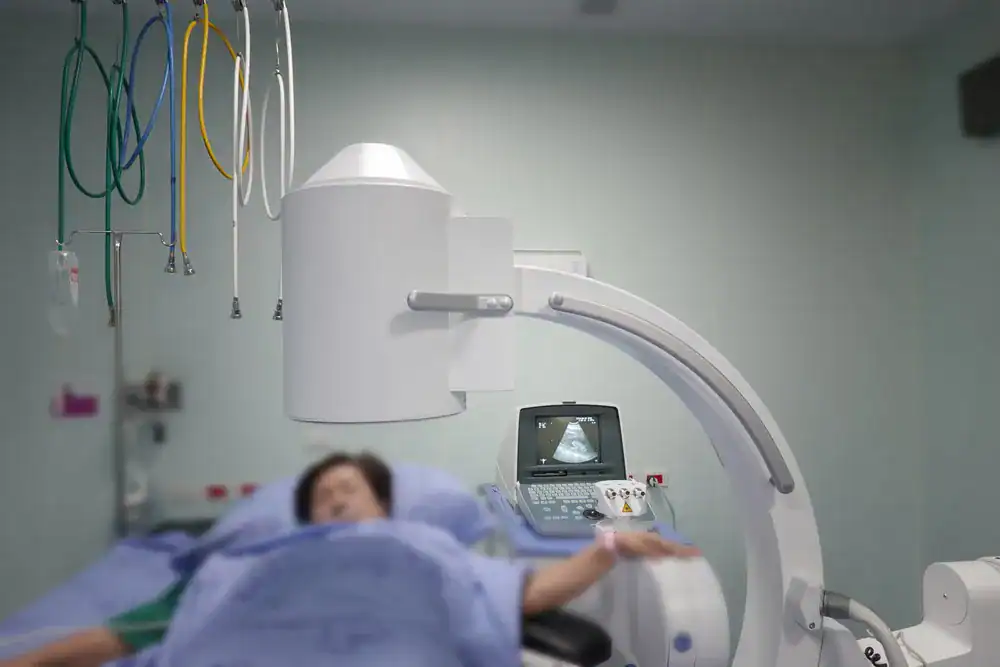
A CT Coronary Angiogram is performed in a specialised imaging facility.
You will lie on a scanning table that moves through a CT scanner. Before imaging begins, a contrast dye is administered through a small intravenous line in your arm. This dye enhances visibility of the coronary arteries.
Electrodes are placed on your chest to monitor heart rhythm during the scan. In some cases, medication may be given to slow the heart rate slightly to improve image clarity.
The scan itself takes only a few minutes. The entire appointment usually lasts around 30 to 60 minutes.
The procedure is painless. Some patients may experience a brief warm sensation when the contrast dye is injected.
After the test, you can typically resume normal activities.
What Can a CT Coronary Angiogram Detect?
Coronary Artery Narrowing
Severity of Blockage
Early Plaque Formation
Advanced or High Risk Plaques
There are known features of plaques that are of higher risk of rupture and thus heart attacks. This is independent of the degree of artery narrowing, and symptoms
Detection of these higher risk plaques, allows early treatment and reduces the risk of heart attacks.
Calcium Scoring
The presence of calcium within the arteries can be assessed, providing additional risk stratification.
By visualising the arteries directly, the test offers clarity that other non-imaging investigations cannot provide.
How Is It Different from Other Heart Tests?
Each cardiac investigation serves a different purpose.
- An ECG assesses electrical activity.
- A stress test evaluates heart performance under exertion.
- A TTE examines heart structure and pumping function.
- A CT Coronary Angiogram directly visualises the coronary arteries.
When heart artery blockage is strongly suspected, imaging provides definitive information.
Your cardiologist in Singapore will recommend the most appropriate test based on your symptoms and risk profile.
Is the Test Safe?
CT Coronary Angiography involves exposure to a controlled amount of radiation and the use of contrast dye. For most patients, the benefits of accurate diagnosis outweigh the risks.
Your heart specialist in Singapore will review your medical history, kidney function, and any previous contrast reactions before recommending the test.
The procedure is widely used and generally well tolerated.
Advanced Cardiac Imaging at Dr Gerard Leong Cardiology
At Dr. Gerard Leong Cardiology, CT Coronary Angiography is recommended when precise visual assessment of the coronary arteries is required. Findings are interpreted in the context of your symptoms, overall cardiovascular risk, and previous investigations.
Accurate imaging allows timely intervention, clearer treatment decisions, and a proactive approach to long-term heart health. Arrange a consultation to discuss whether this investigation is appropriate for you.