
Transthoracic Echocardiogram (TTE)

What Is a Transthoracic Echocardiogram?
A Transthoracic Echocardiogram, commonly known as a TTE, is a non-invasive ultrasound scan of the heart. It uses sound waves to create real-time images of your heart’s structure and function.
Unlike an ECG, which records electrical activity, a TTE allows your cardiologist to see the heart muscle, heart valves, and blood flow within the chambers. It provides detailed information about how well your heart is pumping and whether there are structural abnormalities.
The procedure is painless and does not involve radiation. It is one of the most important imaging tests used by a cardiologist in Singapore to assess heart disease symptoms and evaluate overall cardiac health.
For patients undergoing a heart check-up in Singapore, a TTE often forms part of a comprehensive cardiac evaluation.
Why Is a TTE Important?
The heart is a muscular pump. When its structure or function is affected, symptoms may develop gradually or suddenly.
A TTE helps assess:
- The strength of the heart muscle
- The size of the heart chambers
- The function of heart valves
- Blood flow patterns within the heart
- Signs of heart muscle damage
It is particularly useful in investigating symptoms such as:
- Breathlessness
- Chest discomfort
- Swelling of the legs
- Palpitations
- Fatigue
In some cases, it can also help detect complications following a heart attack or assess whether symptoms may be linked to underlying heart artery blockage.
By providing visual confirmation of heart function, a TTE adds valuable clarity to your diagnosis.
When Is a TTE Recommended?
Your Singapore cardiologist may recommend a Transthoracic Echocardiogram if you:
- Have heart disease symptoms
- Have an abnormal ECG result
- Have a known history of heart valve disease
- Have heart disease, eg coronary artery disease, high blood pressure that can affect heart function.
- Have risk factors for heart disease, eg coronary artery disease, high blood pressure, Diabetes mellitus, that can affect heart function
- Have past history or a family history of cardiomyopathy
- Are being evaluated for possible heart failure or cardiomyopathy
A TTE is also commonly performed after a suspected cardiac event to assess heart muscle recovery and detect any structural damage.
For individuals seeking reassurance as part of a preventive heart check-up in Singapore, a TTE provides detailed insight into heart performance beyond routine blood tests or ECG.
How Is the TTE Performed?
A TTE is performed in a comfortable outpatient setting.
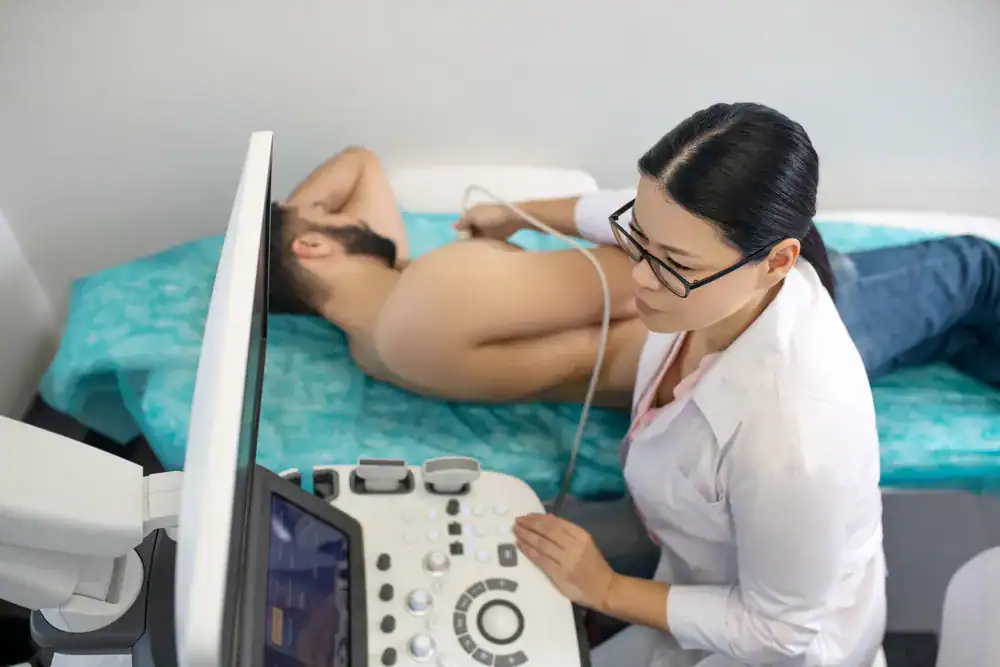
You will lie in a darkened room, on an examination couch, usually on your left side. A small handheld device called a transducer is placed against your chest with a clear gel applied to improve contact.
The transducer sends sound waves through the chest wall, which bounce back from the heart structures. These returning signals are converted into moving images displayed on a monitor.
The test typically takes between 20 and 40 minutes.
You may feel slight pressure from the transducer, but the procedure is otherwise painless. There is no need for recovery time, and you may resume normal activities immediately afterwards.
Results are reviewed carefully by your heart specialist in Singapore, who will explain the findings in clear and practical terms.
What Can a TTE Detect?
Heart Muscle Function
Valve Abnormalities
Structural Changes
Fluid Around the Heart
Effects of Heart Artery Blockage
While a TTE does not directly visualise blocked coronary arteries, it can show areas of the heart muscle that are not contracting normally due to reduced blood supply.
By combining imaging findings with clinical evaluation, your cardiologist in Singapore can determine whether further investigation or treatment is required.
How Is a TTE Different from Other Heart Tests?
It is common for patients to wonder why multiple tests may be required.
- An ECG evaluates electrical activity.
- Blood tests assess biochemical markers.
- A TTE provides a visual assessment of structure and function.
Each test offers different information. Together, they create a complete picture of your cardiovascular health.
In some cases, additional imaging may be recommended if heart artery blockage is strongly suspected.
Personalised Cardiac Imaging at Dr Gerard Leong Cardiology
At Dr. Gerard Leong Cardiology, blood tests are part of a comprehensive and carefully considered cardiac assessment. Each result is reviewed in detail and explained clearly, allowing you to make informed decisions about your health.
If you have concerns about your cardiovascular health or wish to undergo preventive screening, consult today for a structured heart check-up in Singapore and receive clear, expert-led guidance tailored to your individual risk profile.